


How some opera companies are achieving record sales and engagement
In rural Vermont, near a cheerful little creek, sits a picturesque, 200-year-old barn. The barn is a traditional affair, with big doors and a metal grain bin and stables and a restored interior with surprisingly good acoustics. This is the home of BARN OPERA, a little company that has announced a big move: Next season, BARN OPERA will partner with other arts organizations around the state to present touring opera productions. “The ultimate goal is to have one annual production within a half-hour drive of every Vermonter within the entire year,” said Joshua Collier, the company’s artistic director.
BARN OPERA, which regularly sells out its 100-seat barn for its four productions a year, isn’t leaping blindly into the void, here. It’s basing its plans off compelling market research, which indicates that the time is ripe for an expansion. This is welcome, bright news for the company and for the opera field as a whole.
Around the country, companies of all shapes and sizes are recovering, but slower than they’d like. Some have reduced their seasons or folded entirely due to the turbulence of recent years.
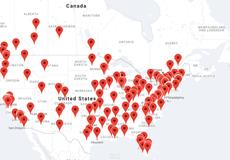
However. Things are not all dark. Companies in all corners of the U.S. like BARN OPERA are achieving record sales, subscriptions, and donations, increasing their community impact to new heights. “I think the future of opera is very bright,” Collier says. He’s right. Houston Grand Opera has nearly 1,000 new donors this season and a huge influx of new ticket buyers, many of whom returned for an additional performance. Opera Columbus reported its strongest sales ever out of its 42-year history, with about 30% growth in ticket sales this season. The Atlanta Opera has increased its budget by leaps and bounds thanks to an influx of donors and sponsors over the past decade. Des Moines Metro Opera raised $20 million in a recent endowment campaign, wildly outperforming expectations. North Carolina Opera’s subscription numbers are actually increasing year-over-year, a trend-bucking rarity.
As the field continues to recover, what distinguishes these companies from their peers?

Shared Fates
Leaders of each company had different theories. Several companies, like Des Moines and Columbus, were building toward anniversary celebrations, and the momentum that they’d built prior to the pandemic helped carry them through the lean years. Some, like Houston and Atlanta, have argued that companies that continued to perform during the pandemic have seen stronger audience retention. Others, like Opera Columbus and BARN OPERA, said that increasing reliance on data analysis to help drive decisions was a key factor.
All agreed that a company’s relationship with its respective community is a critical piece of this puzzle. “I always say now: So goes Houston, so goes Houston Grand Opera,” says Khori Dastoor, HGO’s general director and CEO. Houston is a thriving, growing city with a bullish economy and strong GDP growth forecasts. “I’ve been in Chicago, in San Francisco and New York, in places where the downtown environments are struggling somewhat to recover from the pandemic,” Dastoor says. “And our position here is really different.” Put another way, HGO and opera companies in cities that have recovered quickly tend to be on better footing than their counterparts in cities that are slower to rebound and might be struggling with the optics of safety concerns in addition to population decline.
“When all these new people arrive in the city, they tend to hear that there’s great food and there’s great art, so we have this window of opportunity to welcome new Houstonians to opera,” Dastoor says. “We try to meet them with programming that is designed for them instead of programming designed for a subscription model that we know is shrinking.”
“When the people believe that art is essential for the community, they will support you,” says Tomer Zvulun, general and artistic director of The Atlanta Opera. “They will start to feel that you’re not just there putting on shows, but you’re essential to the city.” The Atlanta Opera was one of the first companies to convert their costume shop to a mask-making station during the pandemic’s early days. The company also purchased a large tent and continued performing during the pandemic, which Zvulun says may have helped the company stay better connected with its audiences as compared to companies that only provided digital offerings due to lockdown policies.
Second Dates
Des Moines Metro Opera has had strong success with subscriber retention and has actually increased subscriptions to a level comparable to the early 2000s, a high-water mark for DMMO. “Many of our subscribers are legacy subscribers, so these subscriptions sometimes transcend generations through family lines,” said Michael Egel, general director and CEO. He says that subscriber loyalty has bolstered sales for non-blockbuster operas like The Love for Three Oranges or The Queen of Spades. North Carolina Opera, a three-production-a-year company, sold more subscriptions in the 2022–2023 than ever before. Eric Mitchko, general director of North Carolina Opera, attributes the bump to extremely selective marketing: “Instead of throwing money into marketing a show that isn’t selling well, sometimes we bank those dollars to market a future show and won’t program that show again.”
That may be true in specific circumstances, but overall the subscription model has been dwindling for decades, a trend that accelerated during the pandemic. “We’re selling more single tickets, so it depends more on the repertoire that you are offering now,” says Zvulun, a point other opera leaders echoed. (The Atlanta Opera has seen flat or declining subscriptions for years.) Currently, many companies are seeing scores of “new-to-file” attendees but declining subscriptions. This churn puts budgets in a more precarious position where it’s harder to forecast than before. This means that, for companies seeing increases in first-timers, enticing them back to the hall is emerging as a top priority. “It’s a weird parallel, but it’s a little like dating,” says Julia Noulin-Mérat, general director and CEO of Opera Columbus. “The most work goes into a first date, but there’s still a ton of work to get that second date, and then maybe it gets easier after that if it’s a match.”
Many companies of all sizes are flirting with new sorts of subscription models. Opera Columbus is considering a Netflix-style monthly subscription instead of a lump sum, for example. “You don’t even notice that $20 gym membership come out, right?” Noulin-Mérat jokes. Other companies are testing packages of a handful of operas rather than the entire season, providing more flexibility to ticket buyers in this more erratic landscape.
Then again, “personally, the subscription model as a whole doesn’t make sense to me, as it suggests that a smaller four shows that appeal to everybody, and that’s often not the case,” says Ned Canty, general director at Opera Memphis. He also notes that companies reducing the number of productions or performances in a season isn’t necessarily a sign of failure. It can be seen as a time of recalibration for the field as it moves from emphasizing subscriptions to selling individual shows. “The tyranny of the subscription model has been weakening like imperial Rome,” Canty jokes. “I’m happy to be one of the Visigoths at the gate.”

New Data, New Traditions
The increased pressure to sell individual shows is a challenge, and to compound that challenge, donors and foundations are also being more targeted with their giving. Some companies, particularly smaller ones, have been able to pivot and make the case that their work is in alignment with these more socially conscious priorities. For example, Anima Mundi Productions, a small Ashland, Oregon-based company that produces opera and other concerts, has doubled its foundation support since the pandemic. “During COVID, foundations realigned their giving with social issues, and we’ve leaned in,” says Ethan Gans-Morse, the company’s executive director. Generally, the company is using the money to build out its community programming, experimenting with offerings like childcare during performances and creating bilingual materials.
Larger companies, too, are calibrating their resources more carefully in this new age. In Columbus, relying more on data has meant cutting print advertisements altogether and bolstering efforts on social media. “Our metrics told us that the audience that would see print advertisements is already coming whether we advertise to them or not, but people on TikTok have no idea opera is happening,” says Noulin-Mérat. Those efforts have indeed led to that significant increase in overall ticket sales, particularly among younger generations, which drives energy and donations, she notes.
HGO has created a business analytics team that reviews ticket sales data and web metrics and more. This information is trafficked to a central dashboard that collates the information. One insight this team has generated: While HGO was raising as much money post-COVID as prior to the pandemic in the immediate aftermath, the number of people donating had shrunk considerably during the pandemic, despite the influx of residents. HGO has been working to address this — quite successfully, judging by the number of new donors the company reports — by retooling its programs and letting go of traditions that aren’t resonating with their patrons any longer. “For example, we used to do a big Christmas tree lighting, but we don’t need to do that anymore. There are 16 other tree lightings in the city now,” Dastoor says. “Instead, we focus those resources on our Christmas Carol Concert, which is doing quite well.
“Ultimately, it’s about learning to say ‘no’ to things that our community is not responding to,” she continues. “Instead of pining for a model that’s gone, we can be humble and meet the moment by adapting and taking every opportunity to serve in a better and deeper way.”
This article was published in the Spring 2024 issue of Opera America Magazine.

Jeremy Reynolds
Jeremy Reynolds is the editor of Opera America Magazine, and he also writes about classical music for Opera, the Pittsburgh Post-Gazette, Symphony Magazine, and The New York Times.