



Staged concert opera trims costs and underscores the music, but it's tricky to market
In opera, staging exists on a spectrum. At one end, there is “grand” opera, that barely movable feast, with its complex sets and glamorous costumes. At the other end is “concert” opera, where singers typically dress in formal attire and stand in front of an orchestra, distilling the art form to only its musical elements.
Between these poles is another sort of production, and one that has been growing in popularity in the post-lockdown landscape. These middle-ground performances, which generally include costumes and projections and a degree of staging in addition to an onstage orchestra, are colloquially known as “semi-staged” operas. (The implication that this form of opera is less than a fully staged performance is unwelcome — a more accurate term might be “staged concert operas.”) Whatever the name, this form of opera isn’t new, but it is certainly on the rise. More than a dozen U.S. opera companies, ranging from large companies like the Dallas Opera, Detroit Opera, and Los Angeles Opera to smaller-budget companies like First Coast Opera, Opera Tampa, and Opera Las Vegas, reported increasing the number of staged concert operas from the 2018–2019 season to the 2022–2023 season in a recent OPERA America survey.
Take Fort Worth Opera, which will produce a staged concert production of La bohème in April. What does that mean exactly? The production’s webpage includes a helpful explainer for attendees that clarifies that the orchestra will be onstage so that “audiences are able to hear the orchestra with extra clarity”; the performers will be in full costume; there will not be a full set, but there will be props, platforms, and some effects to conjure a full theatrical experience; and the singers will be acting as in a staged production. “There’s certainly no less drama than in a fully staged opera production,” the company claims.
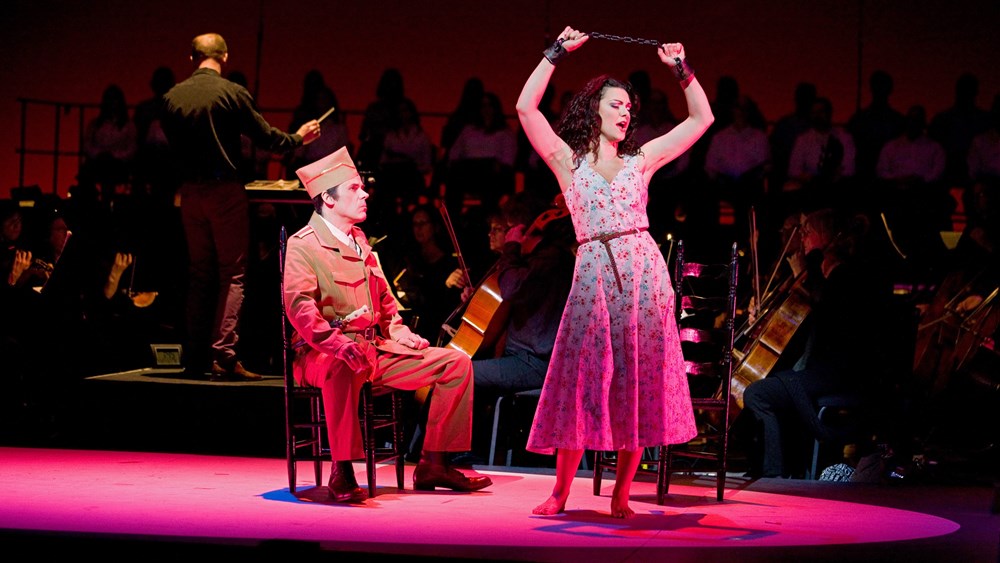
Angela Turner Wilson, FWO’s general and artistic director, explains that this sort of production serves two purposes: It is indeed less expensive than a grand staging, but it also serves to sharpen focus on the opera’s music. “Symphony? Opera? We offer some of both with a full operatic experience minus a few things,” Wilson says, adding that the idea with this production is to offer the burgeoning population — Fort Worth is one of fastest growing cities in the country — an occasion to discover or rediscover core operatic values by hearing La bohème with big-orchestra detail.
And herein lies the crux of the matter. With set building and shipping costs increasing dramatically due to inflation and continued supply chain issues, many opera companies are seeking to reduce costs without reducing the number of performances offered. Concert staging can reduce production costs considerably by substituting digital projections or attendees’ imaginations for grand sets. Artists and company managers involved in these productions argue that this doesn’t devalue the production so much as reorient the focus on the music, elevating the orchestra and singing above the spectacle of flashy sets and complex physical staging. “In opera, the drama is in the music as much as it is in any place else,” says Will Crutchfield, who leads an annual season of little-known early 19th-century operas under the moniker of Teatro Nuovo at Lincoln Center’s Rose Theater and New Jersey’s Montclair State University. “It’s visual and aural. Between those two, there’s no question which element should be dominant.”
Smoke and Mirrors
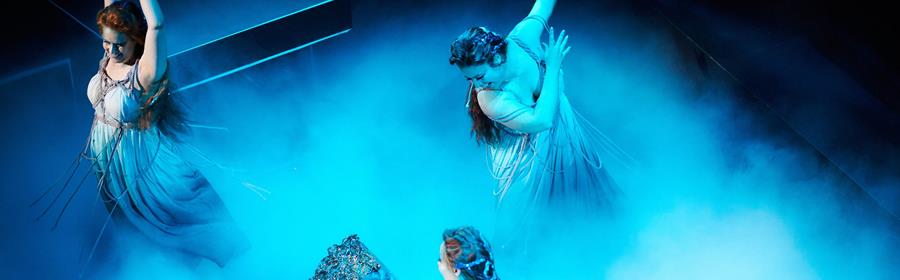
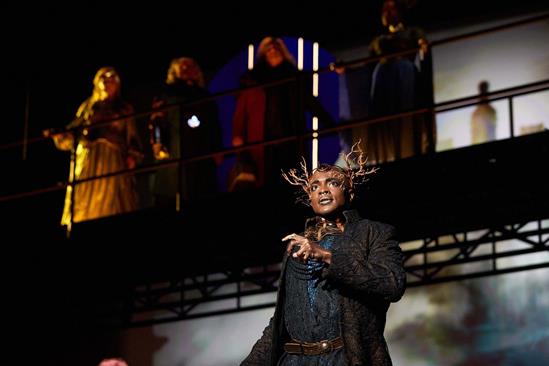
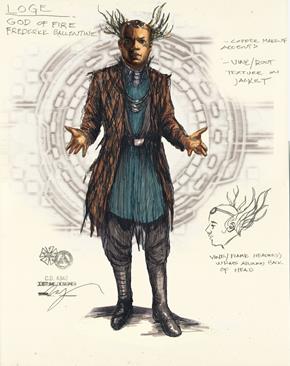
Because the orchestra is typically onstage for these productions, this sort of staging opens up the possibility for all sorts of venues rather than only those with a pit. Opera Parallèle Creative Director Brian Staufenbiel’s staged-concert Das Rheingold premiered at Minnesota Opera in 2016, but thanks to its minimal staging and projection-heavy design, it has since traveled to Seattle Opera, Arizona Opera, Montreal Opera, and now Wagner-deprived Calgary Opera this April.
Artistically speaking, stage magic in Wagner’s world of river maidens, castle-building giants, and Norse gods and goddesses is among the opera’s core values. In Staufenbiel’s production, these elements unfold on a video screen behind a catwalk on which the gods lord over the stage. And the vacated orchestra pit? “Fill it with fog and beautiful lighting and you have a river,” Staufenbiel says. “Fill that pit with dark shadowy lighting and projections and you have a cave filled with the underworld of Nibelheim.”
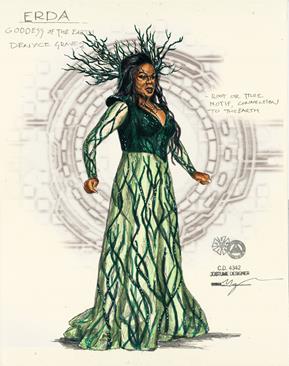
Similarly, in MasterVoices’ revival of Ricky Ian Gordon and Michael Korie’s The Grapes of Wrath, to take place this April at Carnegie Hall, the goal is to be epic — even without a full-blown staging. Says Artistic Director Ted Sperling, “We can fill the whole stage area with beautiful images ... and the stage will be packed with people.” Current climate calamities stand to be better understood in contrast to videos of terrifying dust storms from Depression-era Oklahoma.
These productions’ artistic and economic merits aside, they are not likely to replace staged opera, says Marc A. Scorca, president and CEO of OPERA America. Some opera audiences may prefer Zeffirellian glamor (even with the odd ill-fitting headgear and malfunctioning pyramid). Yet the three productions mentioned above share elements of good operatic hygiene for bringing the drama physically closer to the audience. Fort Worth’s Bohème harkens back to a time in the opera world when scenery barely mattered anyway, and Staufenbiel’s Rheingold uses advanced technology to stimulate the power of suggestion. Both are Brechtian, in a way — the mechanics of the opera are revealed in conjunction with its content. This style of stagecraft can actually engage audiences more actively and avoid what Fort Worth’s Wilson calls “a stage coma” when heavy-scenery productions do everything for the audience.
“In this economic environment,” she says, “it’s about how best to be a steward to the operas we love and to make sure the music is represented first.”

New Possibilities
In staged concert opera, because singers often don’t need to learn as much staging, rehearsal time can be shortened, another potential cost-saving benefit. Additionally, staged concert opera, more often produced in intimate spaces than grand opera halls, has encouraged some companies to experiment with repertoire that they might not otherwise attempt. “Singers are taught to make big, beautiful sounds because the theaters are so huge,” says Antony Walker, artistic director of the 35-year-old, D.C.-based Washington Concert Opera, which attracts the likes of Erin Morley and Kate Lindsey for roles they’re not offered elsewhere (Delibes’ Lakme and Gluck’s Orphée, respectively). Walker’s Lisner Auditorium seats 1,490 — in contrast to the Met’s 3,800. “I’m always exhorting singers to sing softly when it’s marked because you can get more colors and be more expressive,” he says. Recitatives — sometimes treated as mere breathing spaces between arias — can take on theatrical punch that can change the whole complexion of the opera. That’s certainly true of Crutchfield’s Teatro Nuovo, where singers have the stage to themselves, but the pit orchestra is arranged to face them and to create a direct, detailed musical dialogue.
Finally, this also lends itself well to developing or premiering new works. The Boston Symphony Orchestra at Tanglewood has long given U.S. premieres of operas in concert (Britten’s Peter Grimes for one) that have then been picked up and staged by other companies. Concert opera has been a continuous presence at Carnegie Hall, with notable landmarks such as Maria Callas’ 1959 return to New York after her Metropolitan Opera firing, and in vengefully great form singing Bellini’s Il pirata. One opera heard first in excerpts in the Catacombs of Green-Wood Cemetery in Brooklyn — Gregg Kallor’s Frankenstein — has since received its world premiere at Arizona Opera, in October 2023.
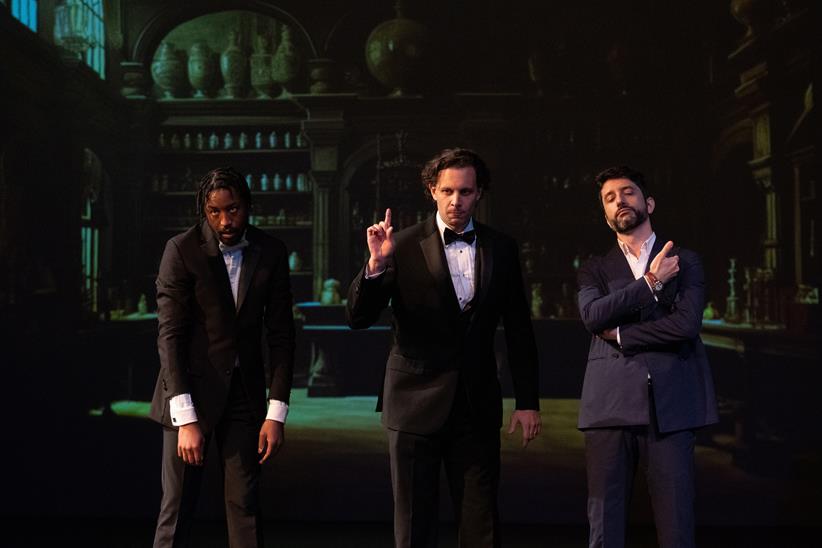
Amid all of this activity, the millions-of-dollars question is this: Is it possible to communicate to the public just how artistically special these presentations are? Not every production has been successful: “Even though the cost is considerably lower, the reduction in audience for us may not be a good tradeoff,” says Greg Carpenter, general and artistic director of Opera Colorado, which in 2022 staged a concert opera version of Cavalleria rusticana. “There’s a certain core of our audience that was interested in that presentation, but single-ticket buyers and more casual fans didn’t seem interested.” Then again, Opera Colorado sold out four nights of a staged concert production in 2014, though Carpenter said the company caught significant backlash from attendees who didn’t realize it was going to be a more conceptual production. “We really tried to set the expectation for the audience, but people didn’t read,” he says. “We need to find the right term for this, the right way to market it.”
In Fort Worth, that question plagues Wilson: “Okay marketing departments, how do we do this?” she asks. “I wish they would come up with another term than ‘semi-staged opera,’ something that means something to the public. We’d all use it!”
For those looking for an alternative, “staged concert opera” is perhaps the most logical alternative.
This article was published in the Winter 2024 issue of Opera America Magazine.

David Patrick Stearns
David Patrick Stearns is a classical music critic and columnist for the Philadelphia Inquirer and a regular contributor to Gramophone, Musical America, and Classical Voice North America.