OPERA America's National Opera Center is a communal home for opera and the performing arts in New York City. Make it your place for recitals, rehearsals, recordings, and more.
Learn More & Rent Now
There was a time when entire operas traveled by train. San Francisco Opera toured up and down the West Coast, priming attendees and paving the way for local companies to take root. Before the Metropolitan Opera launched its HD broadcasts, the company physically toured its productions to different cities like Boston, Philadelphia, Chicago, and elsewhere. “When the Met stopped touring, the local companies expanded,” said celebrated baritone Sherrill Milnes, who toured often with the Met, in a 2021 oral history interview with OPERA America. (The Met stopped touring in 1986.) “Once the Met wasn’t a possibility, residents supported the local company, and that was healthy.”
Today, opera tours are largely a thing of the past. However, due to inflated production costs and erratic revenues, opera companies large and small have been increasingly turning to an even more collaborative production model: the partnership production. Co-productions and co-commissions, which share sets, lighting, costumes, props, and wigs between companies, are nothing new, but a partnership production goes a step further, with producing partners sharing vocal soloists in the hopes of realizing additional savings on rehearsals and other costs. “The idea is to try to capitalize on some of the models that happen in touring Broadway shows,” says David Bennett, general director of San Diego Opera, which is currently in discussions with Austin, Kansas City, Utah, Minnesota, and Seattle to adopt this model.
Interest in this kind of production is becoming more prevalent as opera leaders work to trim budgets, and companies around the country increasingly have been looking to these more intricate collaborations in recent years.
Cost Sharing
Opera companies have always tried to find cost savings where they can, but Marc A. Scorca, president and CEO of OPERA America, describes the financial pressure on opera companies as “exacerbated by the pressure of inflation we’ve experienced over the last several years.” Box office revenue has not reached pre-COVID levels at all companies, and contributed revenue has remained relatively flat.
Sharing casts between multiple companies can offer significant savings: “We have had some instances where this model actually reduces our production costs by up to half,” says Piper Gunnarson, general director and CEO of the New York City-based On Site Opera, which produced its first partnership production, Mozart’s The Secret Gardener, with The Atlanta Opera in 2017. The idea to produce the show in partnership came from conversations between the artistic directors of both companies, and Gunnarson says the production went “extremely well” thanks to the extensive communication between companies. (The only hiccups were related to the weather, as the performances were outdoors.)
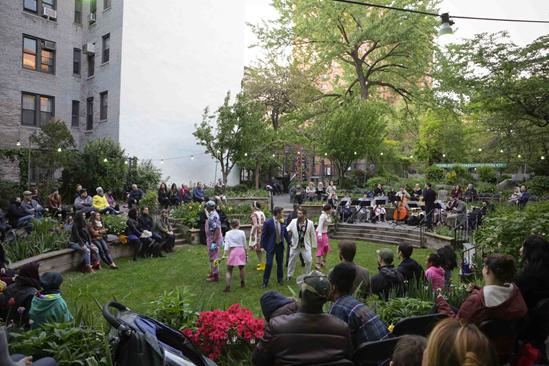
The Atlanta Opera and On Site Opera’s 2017 partnership production of The Secret Gardener, seen here in New York City, featured the same cast: Jonathan Blalock, Kristin Gornstein, Maeve Höglund, Alisa Jordheim, Ashley Kerr, Spencer Viator, and Jorell Williams. (photo: Fay Fox)
The Atlanta Opera and On Site Opera’s 2017 partnership production of The Secret Gardener, seen here in Atlanta (photo: Jeff Roffman/The Atlanta Opera)
In this model, rehearsal costs are pooled by a consortium, as the main cast will not need the full amount of rehearsal time at each partnering opera company. Hotel and per diem expenses for out-of-town artists go down, as well. As an example, Virginia Opera, based in Norfolk, Virginia, staged a partnership production of Madama Butterfly in March in collaboration with Florentine Opera in Milwaukee and Louisville’s Kentucky Opera. “Rather than flying everybody out and paying for hotels for rehearsals for each individual production, we just do it once,” says Peggy Kriha Miller, president and CEO of Virginia Opera. She notes that the savings this generates are pooled by all three companies. Virginia Opera has two additional partnership productions currently in the works. “I don’t feel like anyone is out for themselves,” Kriha Miller says. “We truly are trying to solve problems together. That’s huge.”
For this production, Virginia Opera contributed the set, Kentucky Opera contributed the base costume package, and Florentine Opera had a strong voice in casting the opera. The consortium worked from a shared and transparent budget that benefited each company.
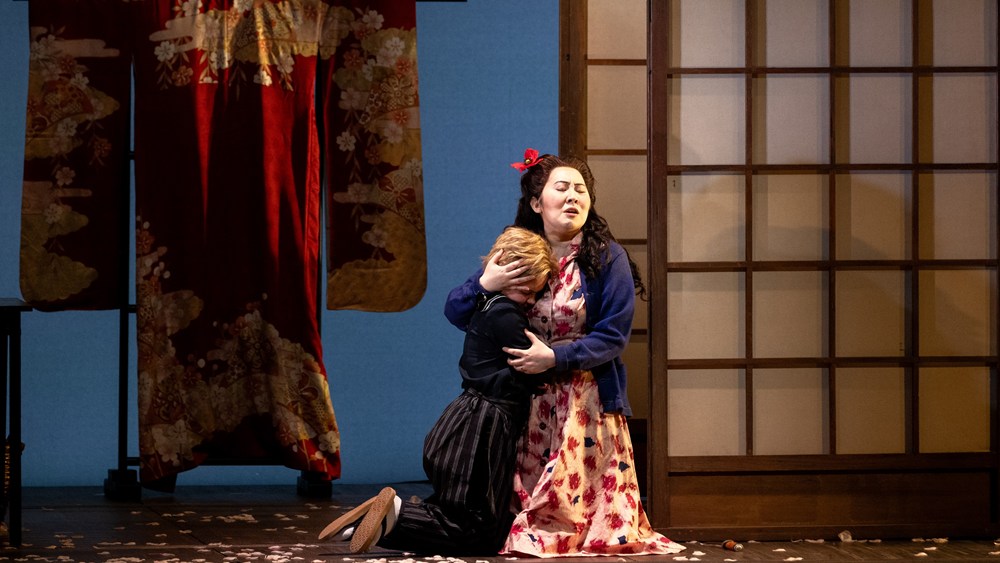
Virginia Opera, Florentine Opera, and Kentucky Opera’s partnership production of Madama Butterfly, seen here in Virginia. Pictured: Alana Kypros and Sachie Ueshima (photo: Ave Pearson Photography)
The way a consortium budget is split among different partnering companies varies by collaboration. On Site Opera commissioned Lucidity (Laura Kaminsky, composer; David Cote, librettist) in collaboration with four other opera companies from around the country. “We are all sharing in the costs of creation: designer fees, prop creation, and artist rehearsals,” Gunnarson says. On Site Opera premieres the opera on November 14, and at least some of the cast members will travel to Seattle to perform the opera the very next week. “With some of our [partnership] productions, it has been an even split of costs, 50/50 between companies,” says Gunnarson, “and in some cases, it has been negotiated with a bit more nuance.” Similarly, when Opera Philadelphia collaborated with the larger Santa Fe Opera to create a partnership production, for example, the split was 40/60, notes David Levy, senior vice president of artistic operations at Opera Philadelphia. “Their budget was larger than ours, and their amount to invest was greater,” he says, partly because Santa Fe builds their sets to be performed outside, adding expense. “When we added additional companies to the consortium, we reduced our contributions accordingly.”
Logistical Details
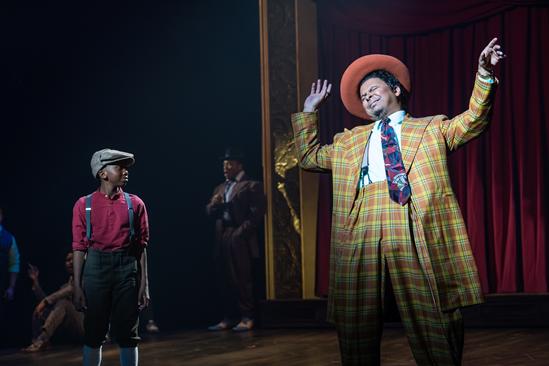
Members of the consortium can offer each other discounts or pool the costs of renting sets and costumes. However, while all of this leads to savings, it also requires a lot more advanced planning. “We have very extensive spreadsheets to account for everything, every shared person that could be in the labor line for costumes or sets or lighting,” Kriha Miller says. “It’s a huge logistical maze you need to align,” agrees Christina Scheppelmann, general director of Seattle Opera, which recently shared members of the cast in its partnership production of X: The Life and Times of Malcolm X with Detroit Opera and Opera Omaha.
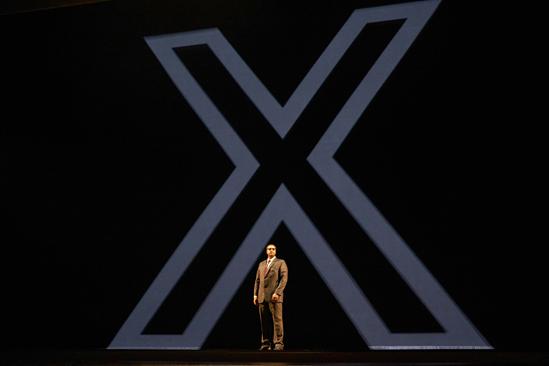
Detroit Opera, Seattle Opera, and Opera Omaha’s partnership production of X: The Life and Times of Malcolm X. Pictured: Kenneth Kellogg at Seattle Opera (photo: Philip Newton)
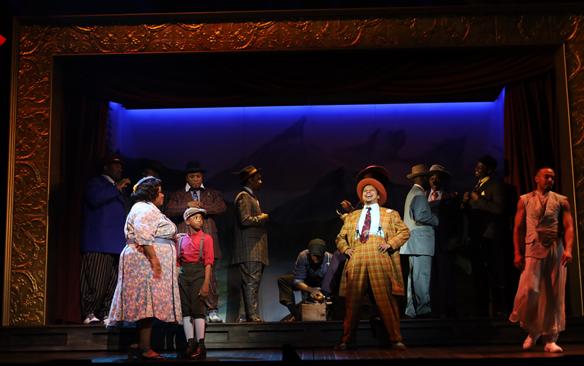
Ronnita Miller, Charles Dennis, and Victor Ryan Robertson in X at Detroit Opera (photo: Micah Shumake)
Charles Dennis and Victor Ryan Robertson in X at Opera Omaha (photo: Kyle Thomas)
Surprise cast changes due to injury or illness or poor planning can eat into rehearsal savings, and there is concern among opera leaders and singers that casting a single singer for multiple productions will mean fewer opportunities for singers in the long run. Plus, crew members who make money from rehearsals may also lose out with the reduced rehearsal schedule.
Partnership productions must also consider how unions may impact their collaborations; some houses are not union, and different unions may have different rules related to production and technical roles. “There have been a few instances of companies that wanted to produce with us but couldn’t because of the way that their union agreement was outlined,” says Gunnarson.
Still, when all goes well, the benefits can outweigh the concerns, as staging a full partnership production can allow companies to present more daring and experimental work than they would have been able to otherwise, as well as more creative interpretations of the inherited repertoire. Portland Opera’s general director, Sue Dixon, says that her company’s upcoming stagings of The Shining and The Factotum would not be possible without sharing casts to reduce costs. “It’s all about taking risk and sharing the risk,” Dixon says, noting that the full partnership production model can trim as much as 20% off her production budget. “We would not be able to take those creative risks if we had to absorb the entire cost.”
An Artist's Perspective
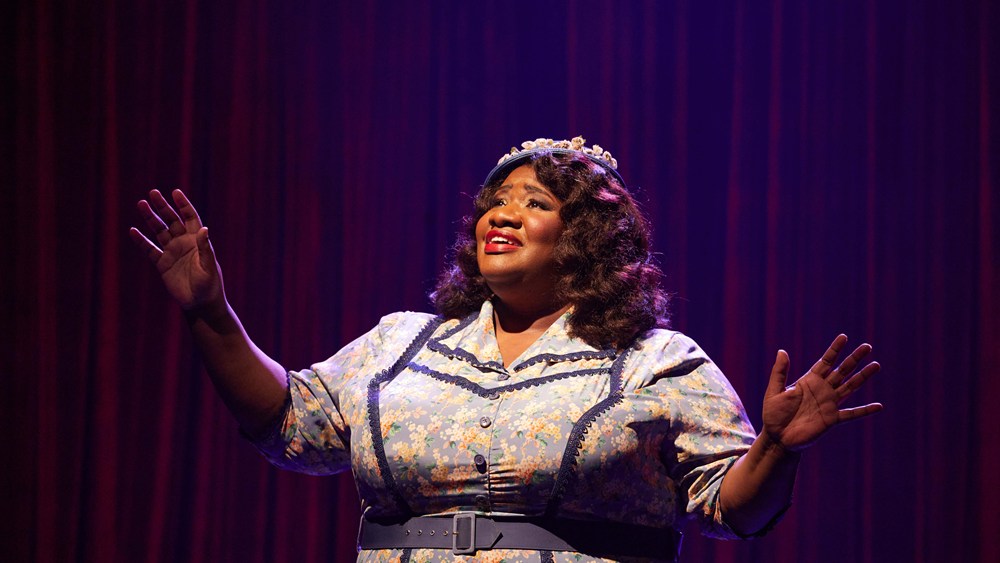
Ronnita Miller in X at Seattle Opera (photo: Philip Newton)
Mezzo-soprano Ronnita Miller performed as Ella/Queen Mother in X: The Life and Times of Malcolm X in a partnership production at Detroit Opera, Seattle Opera, and Opera Omaha.
While the orchestra and a few cast members changed between productions, “most of the vocal ensemble knew ahead of time that they’d be called for the other productions because of how difficult the music is,” she says, adding, “it just saves time for everyone involved and it makes things much easier to put together.”
Vocalist fees are generally based on the number of performances at each company, not rehearsals. So even though Miller rehearsed less with each successive company as the cast became more and more comfortable working together, this did not impact her pay.
“The challenge in repeating any role is in making sure that it stays fresh and that you keep the storytelling lively and alive,” Miller says.