



My First Opera: The competition edition
Three of opera’s rising stars recount their first experiences attending and performing opera.
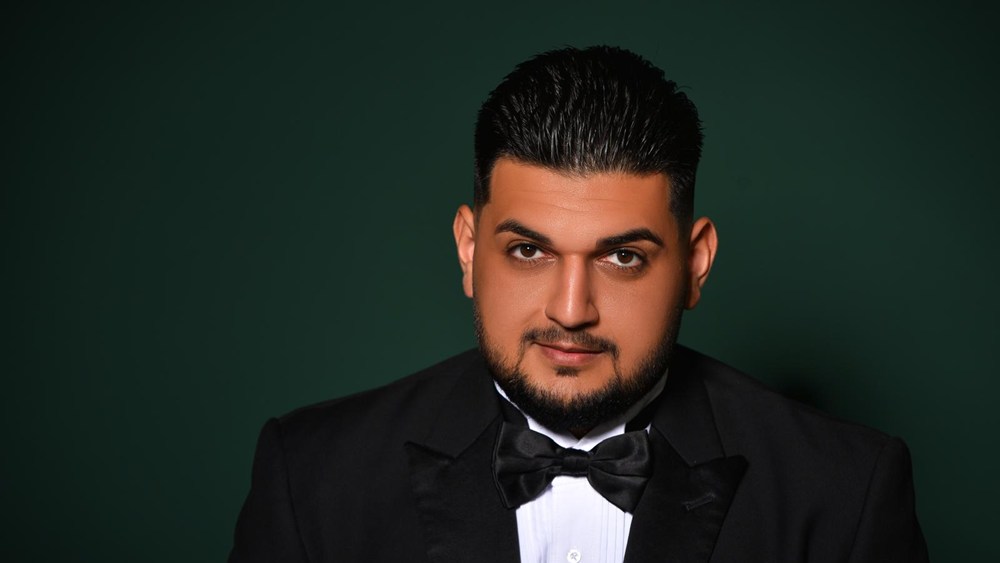
Navasard Hakobyan
Baritone Navasard Hakobyan is a 2024 winner of the Metropolitan Opera’s Laffont Competition. An Armenian native, he is currently a member of Houston Grand Opera’s Butler Studio.
I’ve loved to sing since I was eight years old. I performed at every school event, and I loved the applause. In Garni, Armenia, my hometown, we have a music school where I enrolled in the folk-singing department when I was old enough. I heard the word “opera” at school, but it didn’t pique my interest. That changed when I stumbled upon the famous Three Tenors, who captivated me. I began exploring songs and arias and quickly fell in love with opera and classical music. I would listen to the music of Verdi, Puccini, and Mahler late into the night.
Around that time, I was finishing at the music school and facing the dilemma of choosing my next step. My parents and I decided I should study medicine. But the head of the music school disagreed. He said that although I was still young, I had a big voice — an opera singer’s voice — and I should apply to conservatory. I made a firm decision at that point to pursue opera, and my parents became my biggest supporters.
I saw my first full opera in my home country. It was Tosca, performed by Armenian artists. I was deeply impressed, and I began thinking about when I would have the opportunity to play Scarpia.
Later, during the pandemic, I won an online competition organized by New York’s Premiere Opera Foundation. The very next day, I got an invitation to join HGO’s Brian Speck to participate in the Eleanor McCollum Competition. I arranged for a visa, and quickly made my way to Houston. I wasn’t quite prepared for it: Garni is a village of about 10,000 people, so Houston was a bit of a culture shock. But I won the competition, and when Speck invited me to join the HGO Studio, I gladly accepted.
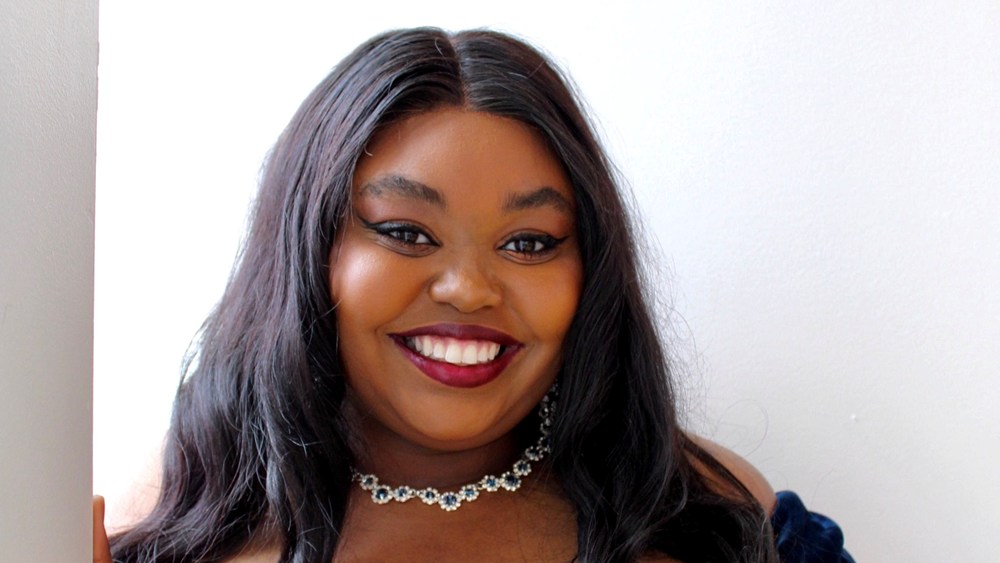
Elizabeth Hanje
Soprano Elizabeth Hanje won first prize in Houston Grand Opera’s 2024 Eleanor McCollum Competition for Young Singers. A graduate of Oberlin Conservatory, Hanje recently joined Houston Grand Opera’s Butler Opera Studio.
I’m a first-generation American, the child of Tanzanian immigrants, born and raised in Vestavia Hills, Alabama. I did not grow up around music, but when I was in fifth grade, a group from the middle school came to give us a taste of what band was like, and I knew that I wanted to be a part of it. I really wanted to play the trumpet, but when I joined the band, they gave me a trombone. In high school, I joined choir as well, even though I still intended to become a professional trombone player.
My first year in choir, the director stopped a rehearsal and said: “Someone in here sounds like an opera singer.” I thought, “That’s cool,” and I looked around to see who it might be. That happened again sophomore year, and I still didn’t think anything of it. Then, at the end of the year, I sang in a musical theater competition, and one of the judges offered to give me voice lessons.
It took me a long time to take her up on it, but eventually I decided to do it. In my first lesson, she said, “You are an opera singer.” My parents were from Tanzania, where there’s no opera at all. So their reaction was, “What is opera?” It took a while to convince them, but they saw that I was passionate about it and supported me.
During my senior year at the Interlochen Arts Academy in Michigan, I went to New York for the Choral Honors program at Carnegie Hall. I found out that an African soprano would be singing at the Met while we were there. That’s how I ended up seeing my first opera: Pretty Yende in La fille du régiment. Javier Camarena, the tenor, got a standing ovation after his aria “Ah, mes amis.” But Yende was the most exciting thing for me. As a child of immigrants, it was great to see a singer from continental Africa on the Met stage.
During that summer, I attended the Washington National Opera Institute, and I got to sing on the Kennedy Center’s Millennium Stage. That’s when I began to understand the excitement you can feel performing. It made me realize that I didn’t just want to watch opera; I wanted to sing it. It made me think, “This is something I want to do for the rest of my life.”
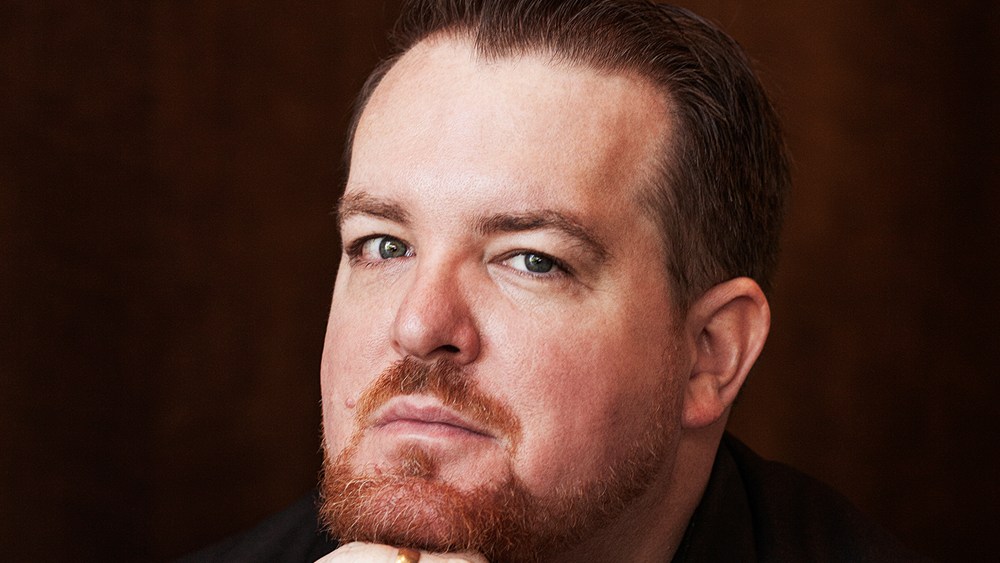
Clay Hilley
American heldentenor Clay Hilley is the winner of the 2024 Richard Tucker Music Foundation Award, which includes a $50,000 cash prize and ongoing support. A native of Statham, Georgia, Hilley considers Deutsche Oper Berlin his home company, though he continues to make appearances in the United States.
I don’t come from a family of musicians, but I started playing the trumpet around fifth grade and the piano by the end of that year. I joined the choir in high school with my friends. The more I sang, the more people said, “I think you’ve got a solo kind of voice. You should try out for the school play.” Later, in the 10th grade, I was cast in Gilbert and Sullivan’s H.M.S. Pinafore. My parents came to see the show and they couldn’t believe their ears. They’d never heard these kinds of opera sounds coming out of their son.
In March of 1998, I went to see Fidelio at Bob Jones University, with Mark Lundberg singing the heldentenor role of Florestan. It was the first grand opera I ever saw. To this day, I still remember how great the orchestra played the overture and the opening note that the tenor sings at the beginning of the second act. I also did a little bit of studying to bone up on Fidelio, and I remember hearing the “O welche Lust” chorus, which is a four-part prisoners’ chorus. The chorus members, who are all political prisoners, finally get to come out one day; it’s the first time they’ve seen the light or breathed fresh air in a long time, and it’s basically like a string quartet — you get this four-part string quartet, but it’s male voices in four parts; it’s just a very nice piece of music.
In 2002, I sang in the chorus of La bohème, and that got me on the grand opera bandwagon. I returned to Bob Jones University, where I first saw Fidelio, in 2014 to do my first Aida as Radamès. I’ve also sung Fidelio myself now, including a seven-performance run as Florestan in Toronto with the Canadian Opera Company. I’ve also sung it with Madison Opera in Wisconsin in 2014 and in concert with the Atlanta Symphony in 2019.
This article was published in the Fall 2024 issue of Opera America Magazine.