




A Q&A on Auditions: Opera leaders and singers are discussing compromise and consolidation
Auditions are essential in singers’ careers, for university and conservatory programs and for year-round and summer resident artist programs. At stake are scholarships and admittance decisions to programs that could set a singer on a path to a successful career.
The audition process can be nerve-wracking enough on its own, but there’s another harsh reality: Auditioning for multiple opportunities can be expensive. Most companies and programs still strongly prefer hearing singers in person before making an offer. (Some programs will accept virtual auditions, though this is an exception.) Companies typically dispatch representatives to New York City and a few other select cities during the fall to hold in-person auditions. This can require a singer to spend hundreds or even thousands of dollars on travel and lodging, all for a chance to sing for 10 minutes in front of a panel of judges.
For some, the costs of the current system are too great. Some advocacy groups, including the Soloist Collective for Emerging Artists (SCEA), are requesting that companies coordinate their schedules to centralize auditions so singers can sing for multiple companies and programs during the same window in the same city — and thereby reduce travel expenses. Company leaders and managers are sympathetic to the idea, but some have noted that this could create a different set of problems for companies and singers alike, including putting too much pressure on individual auditions.
At present, the field is still looking for a workable solution. To further this conversation around auditions, OPERA America spoke with a singer, a company administrator, an artist manager, and a conservatory director to explore the issue from different viewpoints. Below is an edited transcript combining those conversations.
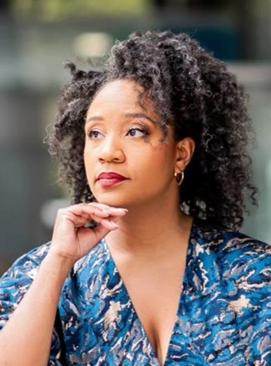



Our Panel
- Meroë Khalia Adeeb, St. Louis-Based Soprano
- Robert Boldin, Director of Artistic Operations at Pittsburgh Opera
- Shawn Marie Jeffery, Vice President of Classical and Creatives at UIA Talent Agency
- Brian Zeger, Artistic Director of Vocal Arts at The Juilliard School
OPERA America: Meroë, could you start us off by sharing what an in-person opera audition is like for a singer?
Meroë Khalia Adeeb: When I go into the room, there’s usually an artistic director or general director and sometimes a conductor, depending on the company. It always feels a little cold, a little quiet. I usually sing two pieces. I pick the first one, something that really shows off my voice’s strengths. They’ll ask for a specific second piece from a pre-set list, and then it’s “thank you for coming,” and that’s it. It can take maybe 10 minutes.
Do finances play a role in deciding which auditions to take?
MKA: Yes, definitely. Sometimes it’s a matter of deciding whether the role or program is worth the travel. I ask myself whether this company pays enough, or if this program will be good enough for my resume to travel to New York. I’ve minimized costs by taking Megabus instead of flying or driving, and I usually crash on friends’ couches. If I didn’t have that option, I’m not sure what I would do.
And are you ever able to audition for multiple opportunities during the same trip?
MKA: Yes, but it’s very rare. The best-case scenario was when I had two or three auditions within the same week in New York. Centralizing auditions would just be so beautiful. The amount of time and money I spend getting to and from the city is getting more and more ridiculous.
Rob, let’s take that to you — do you think opera companies are open to centralizing auditions?
Robert Boldin: It’s a big question. Having been a singer myself, I certainly empathize with the idea. I remember my days taking the train for eight hours to get to New York for a single audition. That said, I think there are some inherent challenges.
Such as?
RB: First, each company is looking for slightly different things in its individual audition process. That could be different voice types or different levels of experience. Beyond that, every company has a unique schedule and planning process. Picking dates that work for multiple companies would be very, very complex.
What else? Shawn, would you like to jump in?
Shawn Marie Jeffery: Well, another potential con — maybe the biggest one — is that if somebody has a bad week or is ill, that potentially wipes out their chances for an entire season if the whole industry hears them at once. If that one brief window is the only time a manager or company hears you, it can have ramifications that extend beyond just the one season.
Meroë, do you agree?
MKA: I agree, yes. That’s probably the biggest downside. But I’d still rather take that chance than make multiple trips.
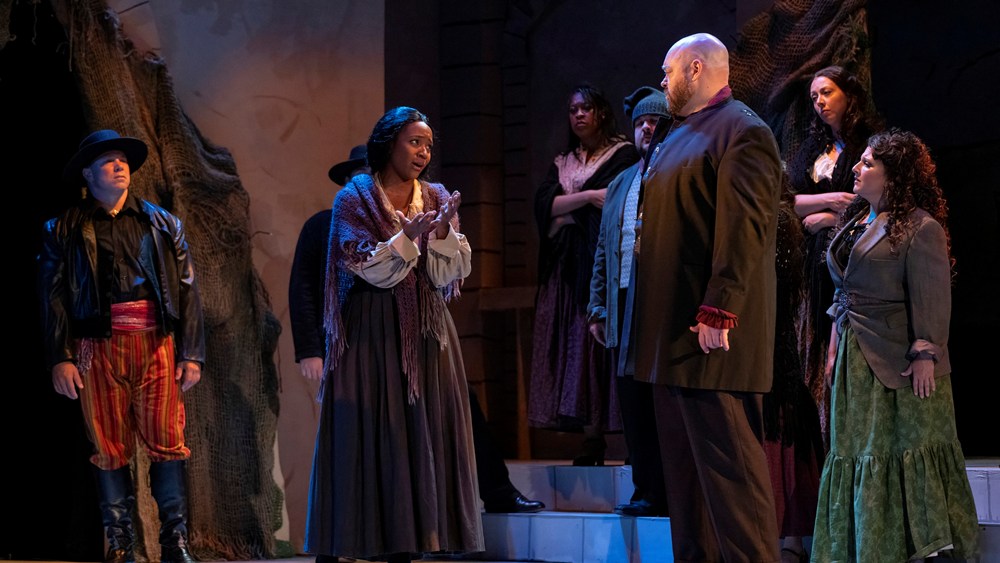
Some singers are advocating that companies and emerging artist programs allow singers to audition virtually. Brian, can a conservatory program like Juilliard make an admissions decision based on a virtual audition?
Brian Zeger: We do have remote auditions, yes, although only a very small percentage of candidates choose this path. We feel it’s important as an equity measure so folks from different parts of the world and different backgrounds are able to take part.
So it’s possible, but rare?
BZ: Yes. During COVID, obviously auditions were 100% remote — they had to be. But now, I find most students really want to put their best foot forward, and they somehow scrape the money together to come audition live. But things happen. Last year, for instance, a young man from Nigeria bought a ticket and planned to come but at the last second couldn’t get his visa. We set up a remote audition for him, and he was accepted.
Do you think professional companies and emerging artist programs should hold remote auditions as well?
BZ: I think there’s an important distinction between auditioning for a school and auditioning for a professional company or residency, because you really cannot assess the size of voice remotely.
Look, if I were putting on a Madama Butterfly and needed a Pinkerton, and I heard a few Pinkertons live and a few of them remotely, it would be like comparing apples and oranges. I wouldn’t know how to assess whether the remote tenors would succeed in my particular theater or not. I just couldn’t tell. But that’s not our concern at Julliard — we’re just looking for the best talent.
Doesn’t this assume that singers have access to quality recording equipment?
MKA: Most singers are required to submit prescreening recordings with our applications to different programs. So, most people have figured something out. Sometimes you can use a college’s equipment, and I’ve even used my phone before. But I eventually had to purchase recording equipment.
Shawn, do you think professional companies should consider remote auditions?
SMJ: I have seen companies occasionally hire someone based on a video recording, but that’s based on the company having a relationship with us as managers and trusting our recommendation as well on whether the singer would be a good fit for the role and theater.
Rob?
RB: Yes, as a caveat I do want to acknowledge that recording can cost money, so virtual auditions wouldn’t completely eliminate those costs for singers. I’d say that if I’m on the fence about somebody and they couldn’t come and sing for us in-person, and could only do virtual, I would still consider them.
That said, hearing a singer live is important, especially at the emerging artist level. There are occasional cases when we’ve covered the expense of bringing a singer to Pittsburgh to audition. Of course, we agree that just because they can’t get to one of our audition cities when we’re there, they shouldn’t be out of the mix.
Brian, what are your thoughts on centralizing auditions?
BZ: At Juilliard, we organize a series of what we call industry auditions. These take place once a semester. We typically bring in more than 30 people from professional opera companies and symphony orchestras, as well as artist managers, to hear auditions at the same time.
And did that put too much pressure on a single audition?
BZ: At first, we were concerned about the pressure of walking into a room and having 30-plus people there as opposed to two or three. But I think everyone recognized the efficiency of this system. And the singers couldn’t worry about pleasing everybody at that point. That’s not going to happen. They had to just do their best, show their best qualities, and see if it was a match anywhere. I think for some people it can actually be rather freeing.
What steps are companies currently taking?
RB: It’s tough. There has been a movement to get rid of application fees for resident artist programs, and that’s now true for Pittsburgh Opera as well. We’ve actually seen about a 30% uptick in applications. That’s good, but we’re also reviewing more than 800 applicants per season — we have limited time to review materials and limited resources to coordinate with other companies.
We know it’s not a perfect system, but I’ll also say that many companies do hold regional auditions in multiple places. Still, I certainly empathize with the position that singers are in.
MKA: It’s true that a lot of companies have reduced or eliminated application fees, which is extremely positive. I don’t know exactly what the perfect solution is. Centralizing auditions would help, but also holding more regional auditions could help folks who don’t live close to New York City. I think the young artist programs especially would benefit from this.
So, everyone is working on this?
SMJ: Yes, I don’t know what the right solution is yet, either. We talked about this topic at the Performer Development Network roundtable at the Opera Conference. One of the solutions that we were tossing around was to hold a virtual audition round and then take the funding that companies and programs usually use for their own travel for regional auditions and invite a certain number of finalists to audition in person, at no cost to the artists.
An Open Call
If you have suggestions for how to improve the current audition system, please submit them here for possible publication in a future issue of Opera America Magazine.
This article was published in the Fall 2024 issue of Opera America Magazine.