




In a world of streaming and swiping, should operas be shortened?
Shortening this notoriously expansive art form isn’t easy.
Opera doesn’t shrink readily, but it is shrinking, and cutting is a delicate process.
After generations of uncut performances that could run in excess of three, four, or five-plus hours, many U.S. companies are trimming down long-established operas in the face of mounting production costs and the supposedly decreasing attention spans of audiences. The extent of the trend is difficult to quantify. Small or not, cuts can be hard to detect, and some companies don’t like admitting to them.
“The amount of cuts is getting bigger every season,” says Caren Levine, an assistant conductor and longtime prompter at the Metropolitan Opera, noting that she owns seven different scores for The Elixir of Love, each from productions with different cuts. Levine is generally anti-cut, but she allows that in the hands of an intelligent director, cuts can clarify and improve an opera.
More companies than not are willing to acknowledge that large-scale operas can benefit from cuts and that they are happening quietly, sometimes undetected. But there are tradeoffs. Trimming operas can reduce overtime payments that kick in for unionized stagehands and musicians around the three-hour mark, but cutting intermissions can reduce concession sales. New operas are generally shorter but at the cost of additional real estate to develop plot points or characters. Singers sometimes lose valuable breaks between big arias or moments, necessary to rest their voices. And some composers, historical and modern alike, write with careful tonal planning, creating a delicate musical scaffolding that pays off in a feeling of resolution for listeners regardless of whether they are aware of the music theory behind it. (Most probably aren’t.)

“We will cut. We will shorten. But it’s complicated,” says Anthony Roth Costanzo, Opera Philadelphia’s general director and president, who approaches cuts not with a stopwatch but with open-ended questions. “What makes musical sense? What makes dramatic sense? What speaks to audiences today? How do you make the psychology legible?”
Such guidelines are not easily addressed, but companies and artists alike are wrestling with the tension between budgets, practicality, and artistic quality. “Every cut has the potential to fundamentally change a piece,” says soprano Christine Goerke, the former associate artistic director at Detroit Opera. “In Elektra, there are traditional cuts that don’t simply shorten the opera — they change the audience’s relationship with the title character. Some make her considerably more sympathetic, while others can make her seem more unhinged.”
She adds: “If we’re making cuts because we hope they’ll produce the numbers we want to see on the spreadsheet, we’re often disappointed.”

Cinematic length
Some companies are deliberately adapting large-scale operas beyond nips and tucks. School tours, holiday matinees, and student performances are tailored to the circumstances at hand, often with limited orchestras and accommodations for tighter venues. Adaptations or reductions are more fundamental than judicious cuts.
In traditional grand opera, modern cinema is setting the tone for length, pacing, and visual dynamism, says librettist Gene Scheer, whose collaborations with composer Jake Heggie include the three-plus-hour hit Moby-Dick. Lately, though, he has joined the “under-90-minutes club,” he says. His and Heggie’s latest opera, The Judgment of Paris, is a 75-minute, one-act opera that premiered in July at Festival Napa Valley in California.
“Audiences are willing to do the epics,” says Heggie, “but people don’t want to be out as late.” This goes for movies, too. Soprano Renée Fleming reports that her husband checks a movie’s runtime before committing to a night out.
Every opera is its own ecosystem that warrants respect when considering cuts. “You could end up in artistic spaces that aren’t gratifying to anyone,” says librettist, translator, and dramaturg Kelley Rourke, who has worked with numerous companies, including The Glimmerglass Festival, where she serves as resident dramaturg.
Some of Rourke’s guidelines: “Bigger cuts are better than death by a thousand hacks.” That preserves the opera’s identity and sense of expanse. Secco recitatives, which consist of sparsely accompanied dialogue, are fair game to cut. “They’re not an engaging experience,” she says. Ballet sequences, which were obligatory digressions in 19th-century French opera, are dispensable. Da capo arias — a staple of Baroque opera where a singer repeats the first part of an aria fully — receive mixed reviews, she notes. Some feel the form is redundant. Others claim the repeated sections deepen the character immeasurably.

Time, place, and repertoire have different precepts for the 79-year-old conductor Sir Mark Elder, former music director of English National Opera and a longtime maestro at the Royal Opera at Covent Garden. Italian operas, with their discrete arias, are more trimmable than through-composed German operas, he says, adding, “Working in the theater is a very pragmatic business.” But the numerous bel canto operas he has recorded — including Rossini’s four-hour Semiramide — need to be uncut on recordings to be fully understood, Elder argues. He even includes that opera’s “appendix arias.”
Every composer is different, Elder notes. Richard Strauss is quite trimmable: “Whenever he didn’t know what to write, he threw more notes on the page,” he says, but he adds that Wagner resists most cuts. Wagner’s operas seem to be a general exception to the idea that cuts are needed at all, in fact. The Metropolitan Opera’s five-hour Tristan und Isolde sold out its run in spring 2026, and this year’s Bayreuth Festival, which also typically presents Wagner uncut, sold out its season in 90 minutes.
One interesting experiment: In May, the Los Angeles Philharmonic, conducted by Gustavo Dudamel, performed the three acts of Die Walküre on separate days — a solution that may be unique to this opera, whose three hour-long acts are self-contained.
Lowering the pedestal
Today, “we have enshrined the composers as gods,” says Eric Einhorn, the new general director of OperaDelaware, “but we forget the composer was a person who would make decisions for the good of the piece.” The composer Handel, for example, revised mercilessly when faced with a flop.
And what about established masterpieces? Teatro Nuovo presented a version of Don Giovanni titled Il Don Giovanni in July at Lincoln Center in a version that the work’s librettist, Lorenzo da Ponte, revised roughly four decades after Giovanni’s premiere. It was the bel canto era, then. Recitatives were accompanied by lower strings rather than harpsichord. Aria order changed within the loose-limbed plot. Vocal ornaments and cadenzas were from the age of Rossini. Plus, da Ponte made some cuts.
Would Mozart have done the same had he not died in 1791? The long-surviving librettist was not necessarily a second choice: He had the authority of an insider. He was a genius, too
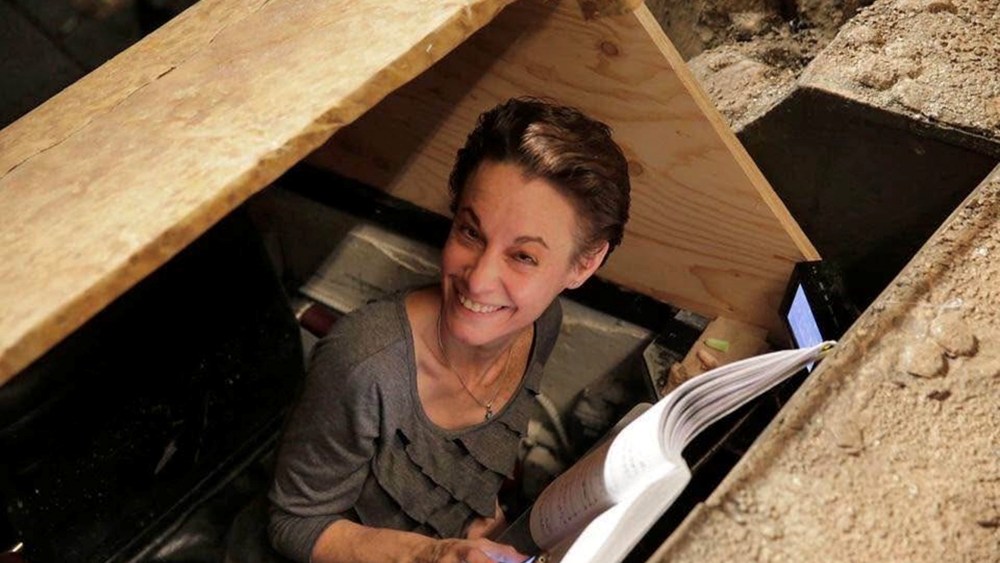
Philip Glass’ operas might seem easiest to cut because the music repeats passages verbatim. But at the Met, which has hosted successful productions of his Satyagraha and Akhnaten, the hypnotic spell they cast has a cabalistic element. “Every repeat matters,” says the Met’s Caren Levine. “They’re thought out mathematically and have to add up to a certain number.”
Modern epics
Still, “There’s power in brevity,” says playwright, composer, and librettist Michael R. Jackson, who authored the Pulitzer Prize-winning Broadway hit A Strange Loop. “The composer can explode the music with the text in all kinds of ways. ... But brevity has to be in the service of the story.”
Jackson would love to write an epic: “I grew up on soap operas — stories that don’t end, and have sweep to them,” he says. But his main contribution to opera so far was the libretto for the mosaic of 10 eight-minute scenes that comprised Opera Philadelphia’s Complications in Sue, a 90-minute work that covered the title character’s lifetime.
That’s a great contrast to the one-act masterpieces such as Salome, Elektra, and Bluebeard’s Castle that contain their action in a single day. The kind of writing that made Jackson’s short scenes in Complications far more than comic sketches is also what distinguishes his bold exploration of Black queer culture in A Strange Loop: fearless, unfiltered candor. “That’s part of my writing style,” says Jackson, who wrote the book, music, and lyrics for the show.

“Storytelling is different now,” says Matt Foss, co-librettist (with Rourke) and stage director of Opera Montana’s 90-minute fall premiere of A River Runs Through It, based on Norman Maclean’s family saga of fly fishing and alcoholism. “We have significantly larger vocabularies. We’re able to compute through our eyes and ears in ways that allow for some compression of information.” Above all, the opera should not seem truncated, which could seem condescending to listeners. “It’s about robust storytelling ... and how it lands on the audience’s imagination, whether through their eyes or guts,” Foss says. “You treat the audience as though they’re poets and geniuses.”
For Christine Goerke, the art itself isn’t the problem. “I think the experience around the art is where we still have work to do,” she says. “People happily devote an entire Sunday to football. When we’re trying to introduce someone to football, people don’t start by asking how to make the game shorter. We ask how to make the experience more inviting.” ■
Pitch Clocks
In the theater world, Shakespeare regularly revised his works, and companies today have no qualms about adapting and trimming the Bard’s words. But while systematic data about average production length is not tracked in the performing arts, a survey of available reports suggests that — like opera companies — orchestras, ballet companies, and theater and Broadway producers are tending toward shorter performance times as well, particularly with new productions.
A review of film industry data suggests that the runtime for popular films has actually risen somewhat since 2000 but is still under two hours — The Odyssey aside.
Farther afield, in the sports world, Major League Baseball instituted a pitch clock in 2023, while the U.S. Open introduced a 25-second serve clock in 2018. MLB has since noticed a rise in attendance of 11% by 2024, with reductions in game times averaging about 25 minutes. The U.S. Open also saw a rise in attendance, but analysts generally attribute this to other factors.
This article was published in the Fall 2026 issue of Opera America Magazine.

David Patrick Stearns
David Patrick Stearns is a classical music critic and columnist for the Philadelphia Inquirer and a regular contributor to Gramophone, Musical America, and Classical Voice North America.