



Opinion: As environmental disasters ramp up, opera companies should prepare accordingly.
As climate emergencies increase, opera companies should step up.
As the effects of climate change continue to ramp up, extreme weather disasters and emergencies will grow more intense and frequent. Arts organizations will not escape these effects; in fact, many have already been impacted.
For fiscal year 2026, the National Endowment for the Arts (NEA) — which has a long history of partnering with the Federal Emergency Management Agency (FEMA) and responding to natural disasters and national emergencies — has named disaster relief and emergency response and preparedness as priorities for upcoming Grants for Arts Projects applications.
There’s a logic here. Performing arts companies routinely rehearse the very skills that are ideal for disaster preparedness during every mainstage production or educational school tour.
From my own experiences running costumes or hair and makeup for shows, I’ve seen firsthand how arts organizations and their employees’ skill sets can be useful in disaster contexts. Few things teach you the value of preparedness like needing to stitch a pants seam that ripped during a dance number. Talk about practicing the art of being cool and calm under pressure!
Arts employees are also experienced in cross-sector practices like crowd management, communications coordination, and large-scale live event operations. They are used to adapting to situations on the ground and running logistical systems like food and beverage, waste, water, and power in all sorts of scenarios. These are the exact skills that local emergency management calls on when a community experiences a disaster.
Some opera companies already have a history of preparing for disasters and pitching in when disasters strike their communities. During the aftermath of the January 2025 wildfires in Los Angeles, LA Opera Connects partnered with LA County to create spaces for children and teens affected by the fires to engage with music, arts and crafts, shared meals, sports activities, and field trips. The Music Center partnered with LA Opera and the LA Philharmonic to offer free work and rehearsal spaces at the Dorothy Chandler Pavilion to arts and cultural organizations, collectives, and other groups that were displaced.
But companies can and need to do more, and there are numerous ways to step up. Picture community or native pollinator gardens in front of opera houses or offices to help with flood mitigation. Or, solar panels and generators used to power outdoor educational tours that can be made available when the grid goes down. Scenic shops could lend their skills and expertise to rebuilding and recovery efforts.
With the rapidly amplifying impacts of the climate crisis, now is the time to consider how opera companies might help their communities prepare for, respond to, and recover from disasters. Behind the scenes, it would take only a slight shift in intention for an opera company to consider how it can apply its existing strengths to disaster preparedness and relief. And, with the NEA prioritizing disaster preparedness, there could be increased opportunity for public funding for such projects.
There are already organizations, networks, and trainings specifically designed for arts organizations to engage in preparedness work. Over the last decade, the Performing Arts Readiness project has awarded emergency preparedness planning grants to The Dallas Opera, Seattle Opera, and New Orleans-based OperaCréole, each of which used the funding to build an institutional continuity of operations plan (COOP). That project has since merged with the National Coalition for Arts’ Preparedness and Emergency Response (NCAPER).
ReadyWhen, a disaster training program and resource hub, is another initiative that helps arts and cultural organizations use their skill sets to prepare for disasters. It is a project of Majestic Collaborations, a consultancy that specializes in disaster preparedness for many kinds of organizations. ReadyWhen’s full training, a Foundations Certificate in Event and Emergency Operations course, covers everything from emergency response structures to food handler safety to emergency power and takes about 15 hours to complete. In October, OPERA America partnered with ReadyWhen to provide practical training to a broad cross-section of New York City’s cultural workforce.
Artists, administrators, and others can learn more about NCAPER’s programs and convenings at ncaper.org and about ReadyWhen’s trainings at readywhen.org. ■
Disaster Stats
-
41%
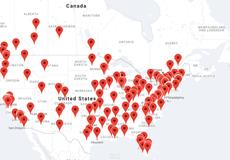
According to The International Institute for Environment and Development, 41% of the U.S. population lived in areas affected by a major disaster or emergency declaration in the year 2024. -
90
There were 90 major disaster declarations in 2024, or one approximately every four days. -
$13
Every $1 invested in disaster preparation can save up to $13 in damage, cleanup, and economic fallout according to a 2024 Climate Resiliency Report from the U.S. Chamber of Commerce, Allstate, and the U.S. Chamber of Commerce Foundation.
This article was published in the Fall 2026 issue of Opera America Magazine.

Megan Carpenter
Megan Carpenter is the director of government affairs and civic practice at OPERA America.