



Healthy Roots: New arts research points to civic engagement for long-term audience growth
The data is in for arts organizations looking for new attendees, and it’s a mixed bag. In February, the Wallace Foundation released its final report after a multi-year, $52 million audience-building study titled “In Search of the Magic Bullet.” (Spoiler: There is no magic bullet.) The study finds that while non-traditional marketing approaches could help reach new attendees, most of these newcomers did not then become regular patrons. It also concludes that traditional audience-building strategies have not always been effective in building audiences in the long term. This has been borne out in recent seasons at opera companies, which have seen record numbers of first-time attendees who haven’t returned as frequently as companies might like.
What are companies to do, then? First, it’s important to keep perspective. “We have to remember that even when you are able to build new audiences, the ticket revenue just isn’t as significant as it used to be — there is a need for other forms of revenue,” says Bronwyn Bevan, Wallace’s vice president of research. Opera has always been subsidized, as this art form’s value goes far beyond its entertainment value and its ability to sell tickets. Today, as inflation continues to drive up costs, ticket revenue tends to account for only about 20% of many companies’ budgets, with the remainder being made up by donations.
In this time of change, however, the winds of philanthropy are shifting as well, both nationally and locally. “For opera, if you look at what philanthropists are looking to fund these days, it’s really not mainstage productions,” says Rebecca Diaz, founder and principal consultant at Diaz Inclusion Consulting and director of IDEA initiatives and community engagement at Pittsburgh Opera. “They want to fund civic practice and civic engagement projects — they want to fund the opera companies doing service projects in homeless shelters and jails because that’s what they want to be associated with.”
Put another way, producing great performances may not be enough to attract the kind of support companies need to survive. Companies that are already doing civic engagement work or are able to build these kinds of partnerships will both better serve their communities and be better able to secure funding as philanthropic priorities evolve.
The Wallace report reinforces the idea that this is an absolutely critical time for companies to demonstrate their value to their local communities. “The study may not explicitly say this, but I think it points us to the conclusion that civic engagement is especially essential now,” Bevan says. “I think this is a time to say, what are we really doing here? What is our purpose?” Audience building remains an important goal, but demonstrating value as a nonprofit beyond performances is coming into focus as a top priority for companies, both on a moral level and a financial level.
Opportunism vs. Authenticity
Building this sort of community value isn’t as simple as offering free tickets or staging performances outside the opera hall. These kinds of partnerships require repeated interaction and buy-in from both parties. “At Opera Philadelphia, we look to see which organizations are doing really good work in the community and ask how we can help satisfy their mission,” says David B. Devan, the company’s outgoing general director. (Countertenor Anthony Roth Costanzo was announced as the company’s new general director in April.) “When it’s about the opera company achieving a specific goal, that’s when you get into transactional relationships over sustained partnerships,” Devan says.
Companies’ use of targeted advertisements in non-White communities, for example, does not help with long-term audience growth and does nothing to add value to those communities. The Wallace Foundation report confirms this idea in its case studies. Instead of these kinds of brief, opportunistic partnerships, companies must continue to invest in authentic, mutually beneficial collaborations with local organizations. “I always used to describe the health of an arts organization like a tree,” Bevan says. “The more deep the roots you have in your community, the stronger and healthier you are.”
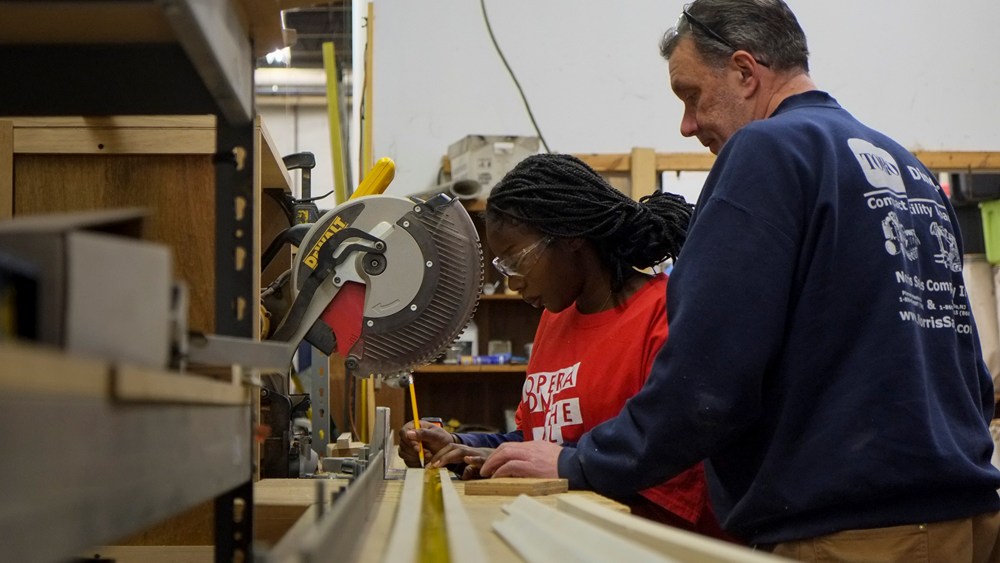
Opera Philadelphia currently operates civically minded programs that range from service-based initiatives like Project Home, which offers weekly singing lessons to people with housing insecurity, to a technical training program that creates a pipeline for backstage workers and job opportunities for local residents. These partnerships create a kind of symbiosis: “The healthier your city, the healthier your organization is going to be,” Devan says. It’s worth noting that this year, those community initiatives will actually reach more people than the company’s ticket sales. Other companies around the country are working with memory care facilities and senior centers to leverage the healing powers of music. Some are working with homeless shelters or prisons. They are bringing art out into the community in a way that provides a service, either through teaching skills or nurturing the spirit or helping fundraise for other organizations.
This is critical — “I think that ‘authenticity’ in a partnership comes from engaging with communities before you need them to help get funding or audiences,” says Diaz. “Are you going to their events where you’re showing up for what they need, where you go to their fundraisers, or their potlucks? Engagement takes time.”
Local Stories
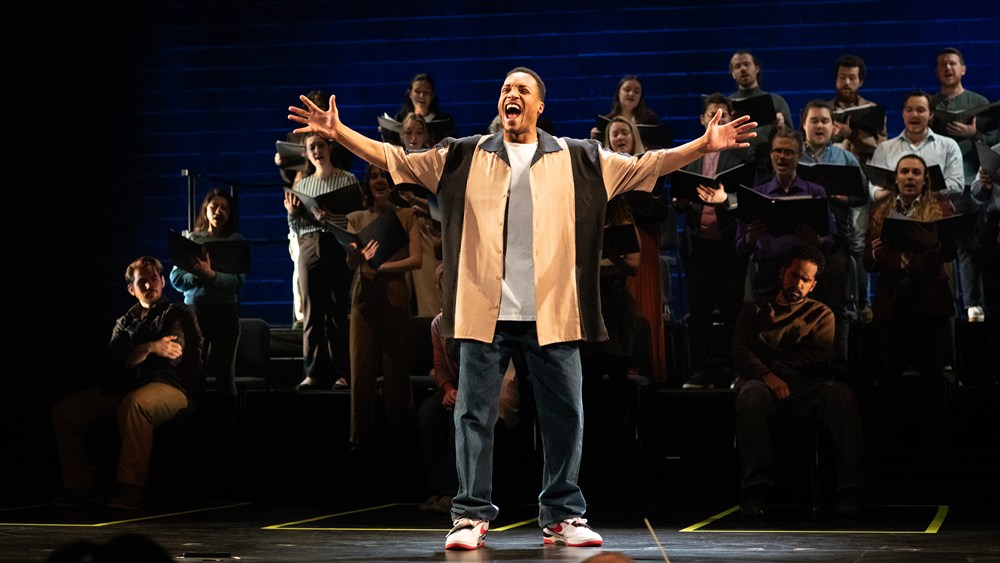
Another avenue for companies to demonstrate local value is to create stories that resonate with area residents. These works can emerge from collaborations between opera creators and service organizations, like when Another City (Jeremy Howard Beck, composer; Stephanie Fleischmann, libretto) premiered at Houston Grand Opera in 2023. For that project, Fleischmann and Beck worked with local homeless shelters to source interviews and bring residents’ experiences to the stage. Similarly, back in 2019, Cincinnati Opera premiered Blind Injustice (Scott Davenport Richards, composer; David Cote, librettist), an opera focusing on six wrongfully incarcerated people freed by the Ohio Innocence Project. Evans Mirageas, artistic director of Cincinnati Opera, says that the project was an instructive example of “how an opera company can be a vital part of its community and help lead a community agenda.” That piece, which received significant additional funding from the Mellon Foundation, had its East Coast premiere at Montclair State University in February this year.
Creating local stories can also mean looking to local history or local creators and putting their narratives on stage. (“It’s also important to remember and discuss the fact that opera companies are keeping local singers and artists employed,” Bevan says. “This is valuable to communities, as well.”) In April, Pittsburgh Opera concluded its 2023–2024 season with a production of The Passion of Mary Cardwell Dawson (Carlos Simon, composer; Sandra Seaton, librettist), an opera about the Black impresario who founded the famous National Negro Opera Company in Pittsburgh. In 2022, Opera Theatre of Saint Louis launched its New Works Collective with the goal of including a wider variety of community perspectives. The project commissions 20-minute operas through an open call to creators, with a mandate that at least one of the three selected teams be St. Louis-based. That project continues through 2025.
“We wanted to experiment with a commissioning model that would welcome new decision makers and new creators into the art form,” says Nicole Freber, managing director of OTSL. The company asked a diverse group of 10 community members, including artists and activists, to lead an open call and select winners to commission. “We’re learning new ways to operate and think about decision making in all of our programming,” Freber says. This year, the resulting works included a story about a neurodivergent student and another about caregivers to elderly family members. “It’s been a really interesting way to invite community members in and understand what they want to see,” Freber says. “The collective was looking for stories of joy and empowerment, which we don’t typically see a lot of in the opera canon.”
Cultural Spaces
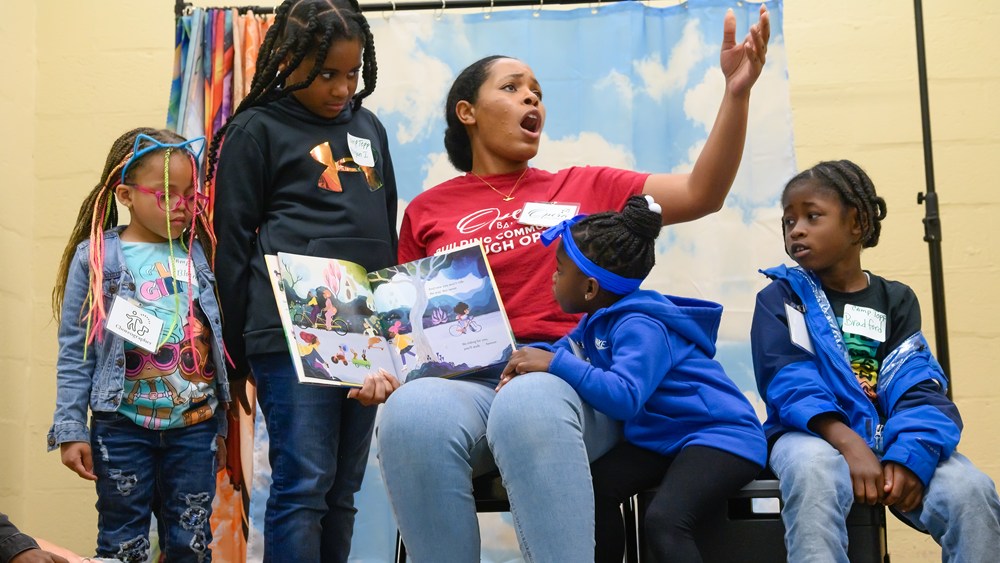
“This idea of showing up for and representing your community really means a lot to civic leaders,” Bevan says. “If they see the opera only as a place people go to performances, it may be a nice cultural jewel to point to, but it’s not necessarily embroiled in the challenges of the community.” When opera companies roll up their sleeves and engage with their local residents and civic groups, it can show their worth in a new light, she explains: “This can buy the kind of goodwill that can help organizations thrive.”
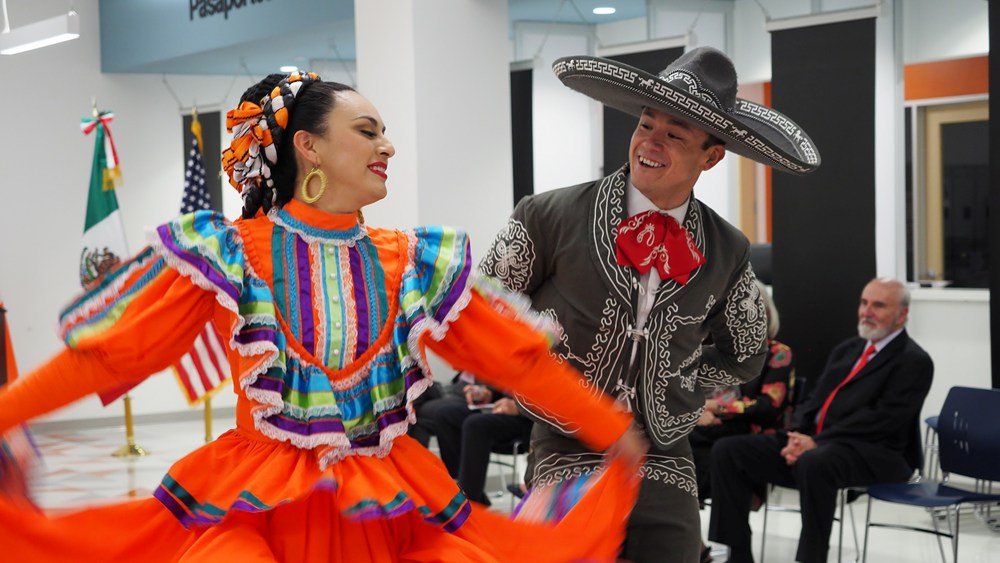
Identifying local needs isn’t necessarily an easy task. It requires creating space within the company for listening to community leaders, which has led some opera companies to welcome community leaders to the board to ensure that non-traditional parts of the community are represented. Austin Opera, for example, has created a permanent position on its board for the Mexican Consulate and a Mexican trustee. This partnership evolved from a program of free concerts at the Mexican Consulate in recent years titled Concerts at the Consulate. These concerts feature a mix of traditional opera, mariachi, and works by contemporary Mexican artists. The performances imbue a typically bureaucratic space with a proud sense of culture, welcoming different segments of the Mexican diaspora and Latine community to feel at home there, and by extension in Austin. “The amount of love and pride we see people feel, you can’t quantify that,” says Claudia Chapa, the company’s curator of Hispanic and Latinx programming.
Santa Fe Opera’s Pueblo Opera Program, which marked its 50th anniversary in 2023, has a long tradition of hosting youth nights during which young people from local Indigenous tribes attend opera performances. In 2018, the company created the Pueblo Opera Cultural Council (POCC). “We wanted to continue that conversation of how the opera can be more in tune with Indigenous communities and the tribal lands that the opera sits on,” says Marita Hinds, a member of the Tesuque Pueblo who is part of the POCC. The seven-member POCC council was created in recognition of the importance of having Indigenous voices lead the way in forging deeper connections with the surrounding pueblos.
While the point isn’t necessarily audience building, establishing these community ties can, in the long run, introduce new people to the art form in meaningful ways. For Antionette Herrera, a member of the Santa Clara Pueblo who also serves on the POCC, the Pueblo Opera Program brought her experience with Santa Fe Opera full circle. “I got hooked,” she says of attending youth nights as a child. Now that she has children of her own, Herrera says, “I want to make sure that these youngsters can be more involved than just attending.” Her daughter performed in the company’s Doctor Atomic corn dance in 2018.
“At the end of the day, this is about engaging with your community without necessarily expecting them to come into a big opera house,” says Diaz. “That is what it means to be local: going to the places where it’s not expected and doing things for the good of your community that aren’t just about growing audiences. Because, you know, it’s just, it’s not about you.”
Additional reporting by Naveen Kumar, a culture critic and journalist whose recent work has appeared in The New York Times, Variety, and The Daily Beast.
This article was published in the Summer 2024 issue of Opera America Magazine.

Jeremy Reynolds
Jeremy Reynolds is the editor of Opera America Magazine, and he also writes about classical music for Opera, the Pittsburgh Post-Gazette, Symphony Magazine, and The New York Times.