Opera Conference 2024: A Week in L.A.
In a vast sound stage in Los Angeles, not far from the Omni Hotel where Opera Conference 2024 was taking place, a gaggle of opera administrators and artists watched a soprano on a television sing in an opulent European-style opera house. Spotlights gave the singer’s hair a soft halo, and the cameraman panned around the singer as she performed, revealing different angles and details of the hall.
It was an illusion — the singer was physically present in the sound stage, but there was no opera house. She was surrounded on three sides and below by an enormous array of LED screens visualizing the opera house in sharp detail. This was a demonstration by Synapse Virtual Production, a TV and film production company offering a glimpse into how technology might enhance the theatricality of live singers in opera productions. “What you see on camera can be seen and felt onstage,” said Justin Diener, CEO of Synapse. “It’s all about the illusion.” The demo whisked attendees next to a log cabin in the woods, with trees rustling in a virtual breeze as snow flurried about, then to a mansion where a pair of live assistants played chess on real furniture in front of the screens, emphasizing that the technology is meant to help enhance the reality of live performance and not replace onstage artists. “The combination of the real and the digital is especially effective,” Diener said.
Over the course of four days (June 5–8), a record number of roughly 800 conference attendees — including nearly 200 composers, librettists, directors, designers, and singers — pondered the benefits and barriers of looking to tech and other sectors for inspiration and solutions to today’s challenges. “Opera has always been on the cutting edge of technology,” said composer and singer Kamala Sankaram. “The first electric dimmers were installed in an opera house after all.” The tech-focused sessions of the conference, hosted by LA Opera, were accompanied by an array of plenary sessions and smaller breakout discussions that touched on all manner of current issues, including opera’s environmental impact, what it means to be truly local, creating belonging for audiences, programming repertoire that resonates with individual communities, and much more.
At the beginning of the week, the World Opera Forum (June 3–5), which welcomed delegates and visitors from six different continents and 36 different countries, explored commonalities and differences in opera production and how it is funded. Extended discussion underscored profound divergence in the way colleagues from abroad respond to the world around us. Delegates debated the responsibility of opera companies to address civic priorities in the communities they serve. They all agreed, however, that opera has the potential to be the most vibrant of the performing arts. (Detailed takeaways from the World Opera Forum will be published later this year.) The conference itself kicked off on Wednesday with a standing- room-only opening session in the Omni’s main ballroom. “It doesn’t matter what we call it, opera is the greatest form of human expression,” said Bibian Kalinde, president of the Pan African Society for Musical Arts Education. Kalinde, a World Opera Forum delegate who teaches music in her home country of Zambia, saw her first live opera during the conference.
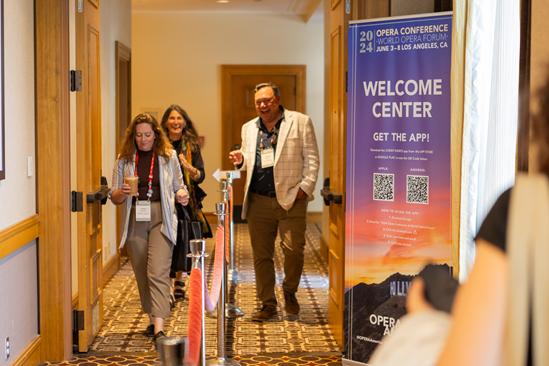
Arrivals at the Welcome Center (photo: Jc Olivera Photography)
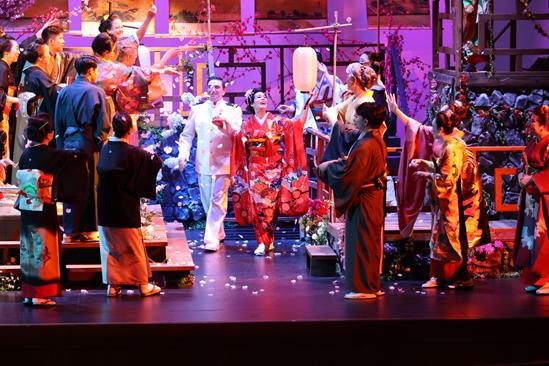
Pacific Opera Project’s Madama Butterfly featured a bilingual Japanese-English libretto. Pictured (at center): Janet Szepei Todd and Peter Lake (photo: Matthew Ian Welch)
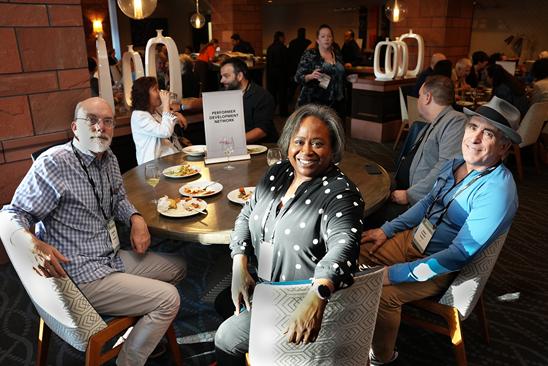
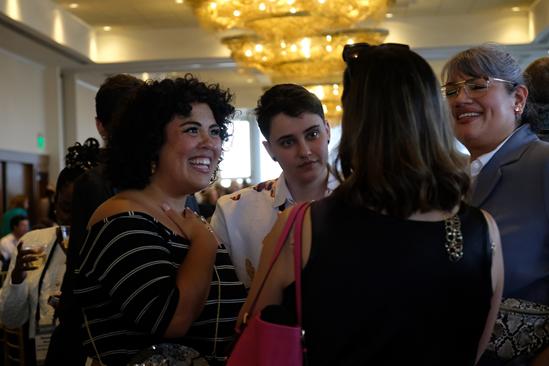
Conference attendees gathered for lively Network Dinners throughout the week. Pictured here: the Performer Development Network (photo: Jc Olivera Photography)
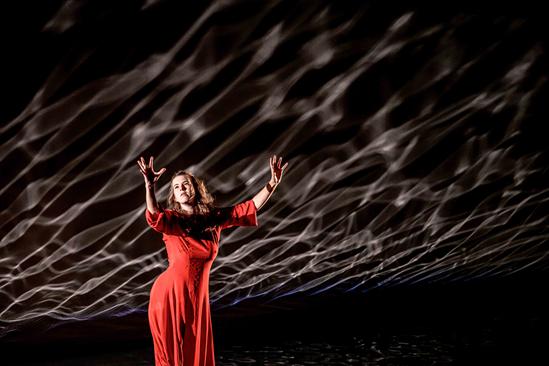
Beth Morrison Projects’ production of Magdalene at the REDCAT in Los Angeles. Pictured: Ariana Daub (photo: Gema Galiana)
Colleagues connected at the Host Company Reception at the Dorothy Chandler Pavilion. (photo: Jc Olivera Photography)
Later, in a session titled “What’s Going to Change in the Years Ahead?,” Doug McLennan, founder of ArtsJournal, quoted Moore’s Law, or the observation that the number of transistors on an integrated circuit will double every two years with minimal rise in cost. He predicted significant changes for the opera field in just a few years: “I think within just four years we’ll need to rethink what it means to own and be compensated for culture,” he said. Other panelists discussed the idea of “hyper segmentation,” or making productions more specifically tuned to individual local communities and using artificial intelligence to help market those productions in different ways to different groups.
Of course, “‘Local’ can mean different things at different times,” said Rita Kampalath, the chief sustainability officer for Los Angeles County, during a plenary session on what it means for an opera company to be truly rooted in its own community. “Sometimes local is 10 million people in the city of Los Angeles, and sometimes it’s a single neighborhood,” she continued, explaining that a strategy for bringing groups of any size together was finding a shared interest (“we love our city”) or cause (“we’d like to improve access to healthcare”). Other speakers on that panel discussed the need for companies to build authentic, symbiotic partnerships with other local organizations rather than merely inviting them to bring their constituents to performances. These partnerships need to be two-way streets.
As the conference continued, a session on opera’s environmental impact zeroed in on air travel as one of the art form’s largest sources of emissions, and also noted that funding may be available at the local, state, and federal levels for companies interested in boosting their green efforts. Another breakout showcased companies like Pocket Opera, Opera on Tap, and the Dallas Opera’s efforts to create reusable education programs that can be viewed all around the world through streaming — without any air travel needed.
Panelists at the final plenary considered whether the opera field was reverting to “business as usual” as the pandemic’s effects fade. Leaders expressed a strong desire to carry on pushing the art form to develop in new ways, committing to support artists as they inspire and innovate the path forward. Shawn Jeffery, vice president at UIA Talent Agencies, captured the moment: “If you turn the wheel of a giant ship even a little bit, the ultimate destination is completely different.”
This article was published in the Summer 2024 issue of Opera America Magazine.
Jeremy Reynolds
Jeremy Reynolds is the editor of Opera America Magazine, and he also writes about classical music for Opera, the Pittsburgh Post-Gazette, Symphony Magazine, and The New York Times.